
Marco Caracciolo, member of the ICLA theory committee, is co-editor, with Marlene Karlsson Marcussen and David Rodriguez, of Narrating Nonhuman Spaces: Form, Story, and Experience beyond Anthropocentrism. Published by Routledge, this edited volume builds on the assumption that our understanding of the nonhuman world is bound up with the experience of space: thinking about and with nonhuman spaces destabilizes human-scale assumptions. Bringing together new formalism, ecocriticism, and narrative theory, contributors demonstrate that literature can transgress the long-established boundary of the human frame.
All posts by Host
Ronen & Cohen (ed.): After Life
Ruth Ronen, former member of the ICLA theory committee, has co-edited, with Rona Cohen, a special issue of Angelaki titled After Life: Recent Philosophy and Death. Organized into five thematic sections, “Death as a Limit to Philosophical Knowledge,” “Challenges to Death: Undying,” “Challenges to the Life/Death Division,” “Heidegger: With and Beyond,” and “The Socio-Political Discourse of Death,” the issue features articles by Étienne Balibar, Joseph Cohen & Raphael Zagury-Orly, Hagi Kenaan & Yaron Senderowicz, Yuval Kremnitzer, Marie-Eve Morin, Jean-Luc Nancy, Galili Shahar, Daniela Vallega-Neu, Hent de Vries, Alenka Zupančič, as well as the editors.
Habjan (ed.): Writing the Himalaya in Polish and Slovenian
Jernej Habjan, former member of the ICLA theory committee, has edited Writing the Himalaya in Polish and Slovenian, a special issue of Slavica TerGestina. The volume features ten articles on mountaineering literature, a genre that is as popular as it is under-researched. Examining writings by Polish and Slovenian pioneers of post-war Himalayan climbing, contributors approach mountaineering as the sport that takes more lives than any the other sport, while also giving us more autobiographies than any other sport—autobiographies that in turn give us new mountaineers.
In memoriam György C. Kálmán
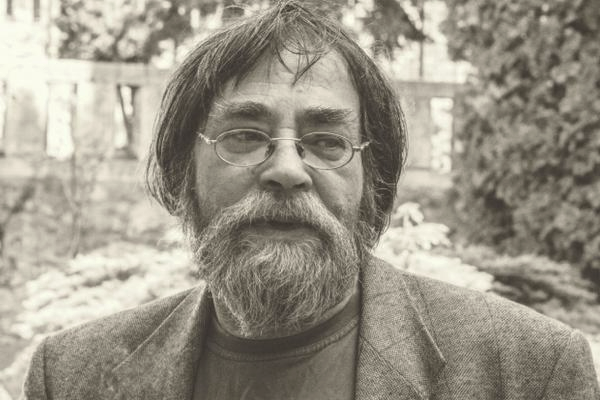
György C. Kálmán, researcher at the Institute for Literary Studies at the Hungarian Academy of Sciences and former member of the ICLA Research Committee on Literary Theory, died on October 17, 2021. György will be greatly missed.
Lachmann: Rhetorik und Wissenspoetik
Renate Lachmann, former member of the ICLA theory committee, has authored Rhetorik und Wissenspoetik: Studien zu Texten von Athanasius Kircher bis Miljenko Jergović (Rhetoric and Knowledge Poetics: From Athanasius Kircher to Miljenko Jergović). Published by transcript, the book looks at those concepts of literary theory that have only shaped once they crossed the various borders between the East and the West. These include neo-rhetorical concepts such as estrangement and intertextuality as well as notions of classical rhetoric (memoria, evidentia, etc.).
Tbilisi 2022: Final Program
“Theorizing Marginality”
Panel of the AILC–ICLA Research Committee on Literary Theory at the AILC–ICLA International Congress “Re-Imagining Literatures of the World: Global and Local, Mainstreams and Margins” (Tbilisi, 24–29 July 2022)
Wednesday, July 27
15:00–16:30 (Georgia Standard Time), Session 1
Theoretical and Philosophical Aspects
Chair: Robert Young
Divya Dwivedi: Marginalysis
Karin Kukkonen: Thinking Outside the Box: Theorizing Marginality through Creativity
Ivana Perica: The “Imperative to Right” and the Right to Marginality
17:00–18:30, Session 2
Theoretical and Philosophical Aspects (continued)
Chair: Stefan Willer
Esra Almas: Minor not Marginal: Contemporary Jewish Memory Writing in Turkey
Rok Benčin: Fiction and the Conflict of Worlds
Robert J.C. Young: Blanked: Being at the Margin
Thursday, July 28
10:00–11:30 (Georgia Standard Time), Session 3
Minor Literatures
Chair: Divya Dwivedi
Alexandre Gefen: Biofiction: The Worldwide Rise of a Rogue Genre
Woosung Kang: The Idea of Minor Cinema in East Asia
Xiaofan Amy Li: Contemporary Poetry, the Marginal Elite in World Literature?
12:00–13:30, Session 4
Aesthetics, Language and Translation
Chair: Alexandre Gefen
Zaal Andronikashvili: The Language of World Literature: Nikolai Marr’s Utopian Linguistics
Mariam Popal: Listening – A Critical Reading vis-à-vis the O/other of the Self
Tiphaine Samoyault: Translation of Minor Languages: Notes and Glossaries
15:00–16:30, Session 5
Aesthetics, Language and Translation (continued)
Chair: Robert Young
Elisabeth Weber: Margins, Borders, Tendrils, Twines: Thinking with Plants as Cosmopolitics
Stefan Willer: Strange Cases
Followed by the ICLA Research Committee on Literary Theory Business Meeting for members of the Committee.
Zoom links:
Wednesday sessions:
https://nyu.zoom.us/j/93871325110
Meeting ID: 938 7132 5110
Thursday sessions:
https://nyu.zoom.us/j/96930165477
Meeting ID: 969 3016 5477
Tbilisi 2022: Draft Program
The draft program of the 2022 workshop of the AILC/ICLA Research Committee on Literary Theory is available at the “Workshops” page of the Committee website. Titled “Theorizing Marginality,” the workshop will be held from 27–28 July in hybrid format as part of the twenty-third triennial congress of the AILC/ICLA, which will take place from 24–29 July in Tbilisi.
Paris (@ Zoom) 2021 revisited in Paris
“Theorizing Chance,” the 2021 workshop of the AILC/ICLA Research Committee on Literary Theory, is going to be revisited in the framework of the 2022 congress of ALEA, titled “Figures du hasard / Figures of Chance.” Chaired by Anne Duprat and Alexandre Gefen, the new installment of the workshop will take place on 9 June 2022 in Paris (54 bd Raspail, Salle B1-01). For the link to remote participation, please email Louise Dehondt at louise.dehondt@u-picardie.fr.
Tbilisi 2022: hybrid format
The organizers of the forthcoming congress of the ICLA have announced that the congress is going to be held in a hybrid format. This includes the workshop of the ICLA Research Committee on Literary Theory. Any further updates will be available on the congress website.
Tbilisi 2022: Theorizing Marginality
This year’s workshop of the AILC/ICLA Research Committee on Literary Theory will be held as part of the twenty-third triennial congress of the AILC/ICLA, which will take place from 24–29 July in Tbilisi. Titled “Theorizing Marginality,” the workshop will be hosted by the Ivane Javakhisvhili Tbilisi State University and the Shota Rustaveli Institute of Georgian Literature. The program is forthcoming on this site.
 ICLA theory